

.webp)
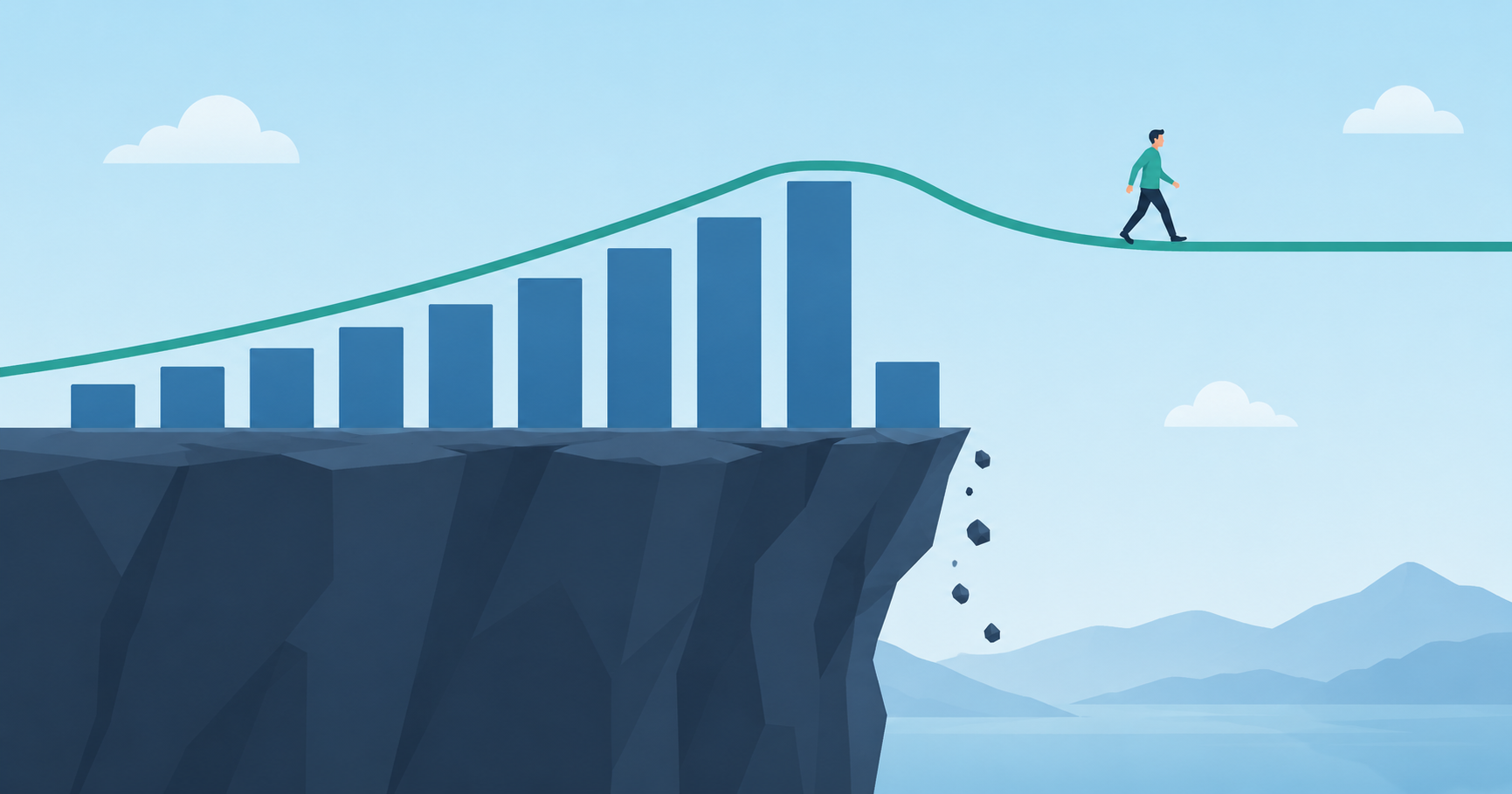
Temporary funding is what got a lot of state technology built. It's also why a lot of it gets abandoned.
A new report from NASCIO and Forrester, covered by StateScoop and GovTech on September 16, names this problem the "Funding Cliff." One-time money pays for new systems and raises expectations for what they'll do. When the money runs out, the agency can't keep either going. The report also describes a "Planning Trap": budget cycles move more slowly than the technology they pay for.
Both problems are hitting energy offices and regulatory agencies right now. The biggest example isn't mentioned in either write-up: the platforms states are standing up to run federally funded rebate programs.
What Is a Funding Cliff?
A funding cliff happens when a program's technology is built for one funding source and can't outlive it. The system works while the grant lasts. When the grant ends, the agency loses the system, the data inside it, and the capacity its staff built around it. Most people treat this as a budgeting problem that shows up at the end of the grant. In practice, it gets decided at the start, when the agency chooses what to buy.
What to Look For in a Platform That Outlasts the Grant
If you're choosing technology for a program funded with one-time money, these capabilities decide whether it survives.
Configurable, not custom-coded. Forms, workflows, eligibility rules, and approval routing should be things staff can configure. If every change needs a developer, every future program becomes a new build.
One data model across programs. Applicants, contractors, licensees, and payments should live in one centralized database. They shouldn't sit in a single-purpose tool that disappears when the program ends.
Modular by design. The rebate program should be the first module on the platform, not the whole platform. Licensing, permitting, inspections, and reporting can be added to the same foundation later.
Audit trails that outlive the program. Federal programs have long record-retention requirements. If the system is shut down, the records need somewhere to go.
Deployment measured in months, not years. A platform that takes a full budget cycle to launch walks straight into the Planning Trap.
Signs Your Program Is Heading for a Cliff
- The system was scoped, bought, and named for a single program.
- Nobody has written down what happens to the data when the grant closes.
- Adding a new program would mean a new procurement, not a new configuration.
- Your vendor's contract ends when the funding ends, and so does their interest.
- Staff talk about "the rebate system" and "the licensing system" as if they could never be the same thing.
If two or more of these apply, the cliff is already built into the contract.
Why This Matters More Right Now
States are running a wave of one-time federal programs, including the IRA Home Energy Rebates, on tight timelines. Speed was the priority, and that made sense. But FY27 budget building is underway. The question agencies will face next isn't how to launch. It's what they'll still have once the money is spent.
The NASCIO report points in the same direction. It advises IT leaders to tie technology to mission outcomes and to cut structural waste, such as duplicate contracts and overlapping tools, before cutting capacity. Buying a separate single-purpose system for every funding stream is exactly the kind of duplication it describes.
How Everblue Approaches It
Everblue's Everserve platform is a secure, centralized portal and database system for government agencies. It covers permitting, licensing, inspections, certifications, enforcement, reporting, and customer self-service. Rebate management and license management run on the same foundation. A rebate program becomes one use of the platform, and the agency keeps the platform after that program ends.
Speed matters too, because it's the answer to the Planning Trap. When the Nevada Manufactured Housing Division moved off paper, it expected the project to take a full year. Everblue and the Division had live users in 2.5 months. The launch covered:
- 40 forms digitized, each with its own automated workflow
- 13 user roles, each with a tailored dashboard
- 7 program areas unified in one connected system
- Annual park demographics approval cut from 1.5 days to 1 hour
- Records dating back to 1978 now managed in one place
As a veteran-owned business already working with more than 25 states, we've seen what separates a program that scales from one that strains. The difference is usually decided before the first application comes in.
If your agency is running a program on one-time funding, let's talk about what your technology should look like on the day that funding ends.



.webp)